
The Families’ Fracturing Alliance
If Beale Street Could TalkThis thread traces how Fonny’s case exposes divisions between the Hunt household and the Rivers family, then forces the two fathers into a fragile alliance.
increasing Bearing strength in each event
 decreasing
Bearing strength in each eventdecreasingA Family Divided by Faith
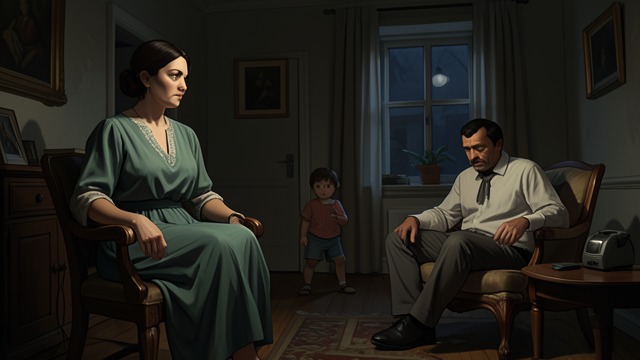
A Household Under Strain
Conflicting forms of care
Fonny grows up between Frank’s affection and Alice’s religious authority. His mother and sisters see his independence as disobedience, while Frank shares his son’s resistance to the narrow life imposed on him. The difference shapes the household well before the criminal case: love exists, but it does not produce agreement about who Fonny is or what he needs.
Tish becomes an outsider
Tish’s closeness to Fonny also makes her unwelcome in Alice’s home. She recognizes that Alice and the sisters judge her appearance and background, while Frank welcomes the friendship that grows between the young people. These early divisions matter later because the family cannot respond to Fonny’s arrest as a united group. The prosecution will encounter a household already divided over whether Fonny deserves loyalty and protection.
Pregnancy and Rejection
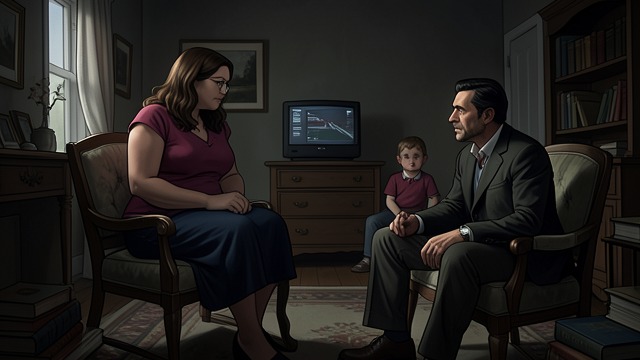
The News Divides the Room
Two households respond differently
Tish’s family receives the news of her pregnancy with concern but also with practical commitment: Sharon tells her to hold on to the child, and Joseph and Ernestine agree that Fonny is one of their own. When Frank comes over, he too is glad that his son will become a father. The Riverses and Frank recognize the child as a reason to stand together despite the danger surrounding Fonny.
Alice’s condemnation
Alice instead asks who will be responsible for the baby and condemns Tish’s pregnancy as sinful. Her attack turns an already strained family relationship into an open rupture. Tish challenges Alice to confront the fact that the child is in her body, while Ernestine makes clear that the Rivers family will protect her. The scene establishes that support cannot be presumed from blood ties: the people who commit themselves to Fonny are not all members of the Hunt household.
The Fathers Join Forces

A New Alliance
Grief becomes shared responsibility
Joseph and Frank sit together to confront the fact that Fonny’s case has placed both families in danger. Joseph urges Frank to stop blaming himself and to focus on what can be done. Frank admits that he loves Fonny deeply and worries that he failed as a father, especially in the face of Alice’s influence and the family’s long-running conflict.
Resolve without resources
The men have little money and no simple route to Fonny’s freedom, but Joseph refuses to treat poverty as proof that resistance is pointless. He frames Fonny as their shared child and calls on Frank to help make something happen. Their alliance transforms the case from Tish’s burden into a collective undertaking. It also gives the novel a counterpoint to the split within the Hunt home: solidarity is chosen, and it is built through action rather than kinship alone.
The Cost of Raising Money
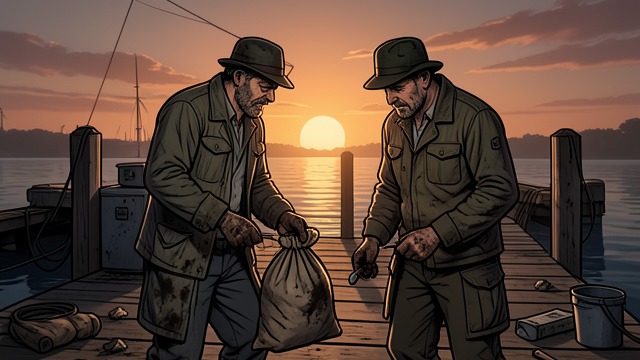
The Family Pays to Resist
Pressure on the working household
As the legal struggle continues, Joseph and Frank work overtime and the family looks for every available source of money. Their efforts take place alongside the ordinary demands of work, pregnancy, and prison visits. Joseph and Frank also turn to stealing from the docks and garment center, risking arrest themselves because lawful earnings cannot meet the needs created by the case.
A dangerous form of sacrifice
The men conceal the thefts from Tish and the others so that the family cannot be accused as accomplices. Their silence is protective, but it also shows how far the legal conflict has reached into their lives: saving Fonny may require the fathers to endanger their own freedom. The prospect of bail promises a possible opening, yet it makes money another instrument of pressure. The state does not need to prove Fonny guilty in order to make his family pay dearly for resisting the accusation.
Frank’s Final Crisis

A Father Reaches His Limit
Loss compounds the case
Frank loses his job and is threatened with jail, adding economic danger to the fear he already carries for Fonny. After he returns home drunk and curses the household, he leaves and disappears. Adrienne calls Tish in panic, revealing how much she cares for her father despite the earlier hostility between the families. The daughters who once stood against Fonny now experience the same helplessness that has long consumed the people trying to save him.
The alliance faces catastrophe
Frank is found far up the river, in the woods, sitting in his locked car with the engine running. The news arrives as Tish is close to labor, and the family cannot tell Fonny until the following morning. The novel leaves the precise circumstances of Frank’s crisis unstated, but its connection to unemployment, the prosecution, and accumulated despair is unmistakable. The family’s effort to save Fonny has brought the fathers together, yet it cannot shield Frank from the cost of carrying that struggle.
During Tish and Fonny’s childhood and early adolescence
The Saturday night Tish announces her pregnancy
The night Joseph and Frank discuss the family’s response in a bar
As the trial date shifts and bail becomes a possibility
The night Frank disappears after losing his job
